ai agent org chart: managers, reports, and delegation you can watch
wire agents into a real hierarchy on a live canvas. work travels down manager lines to direct reports and results come back up, with no orchestration code.
an ai agent org chart is the reporting structure you give a team of agents: who manages whom, and therefore who may hand work to whom. it is not a prompt chain you script in advance. you wire a manager to its reports on a canvas, and from then on an agent can pass work to its own direct reports and report results back to its own manager. change the wiring and the routing changes with it.
wire it on the canvas
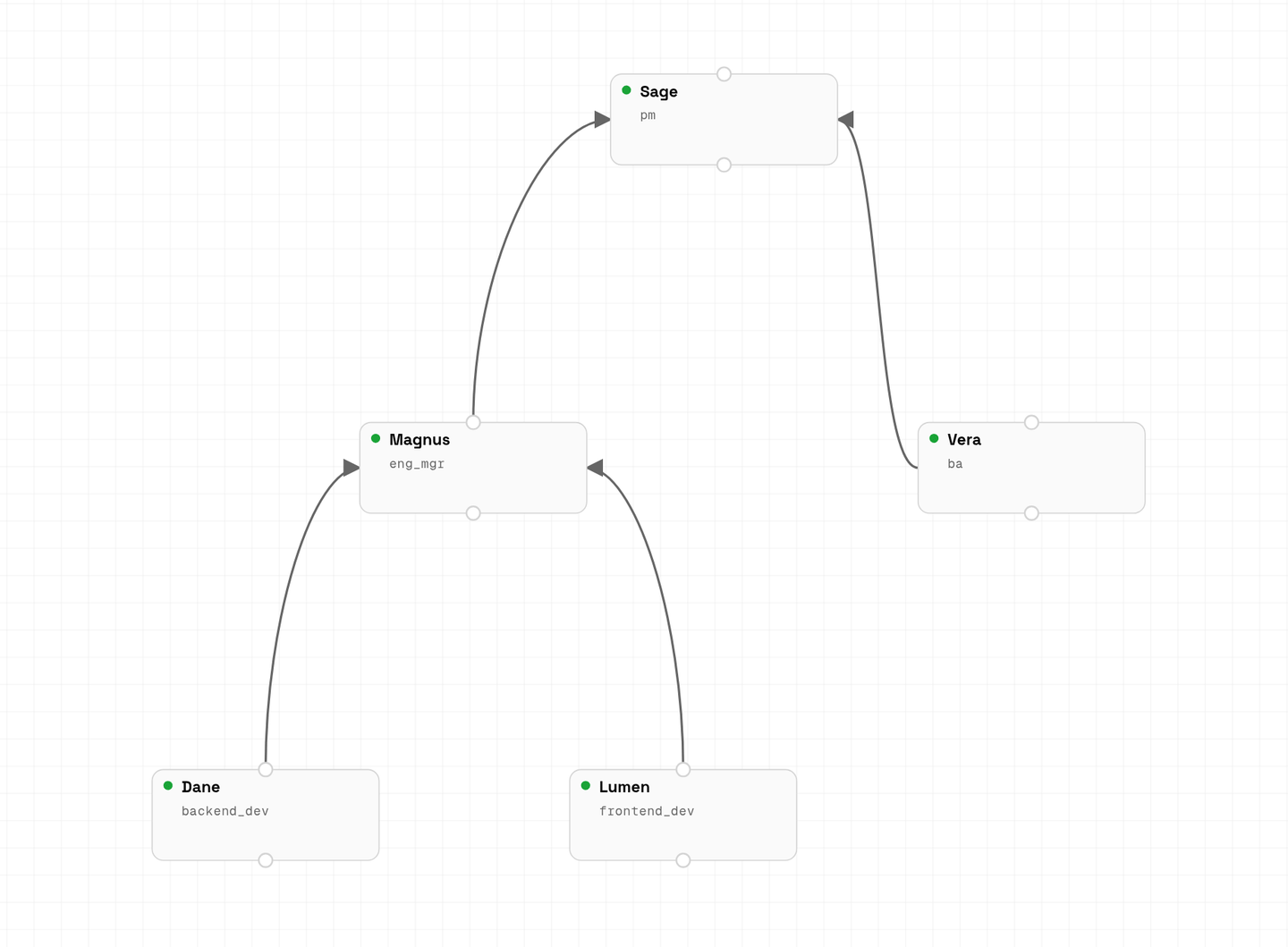
every room has a hierarchy view. each agent is a node you drag where you want it, and you draw a line from an agent to the manager it reports to. that single connection is the whole configuration.
- flat. leave everyone unwired and each agent works directly with you.
- one manager. a manager with a few specialists under it, the common starting shape.
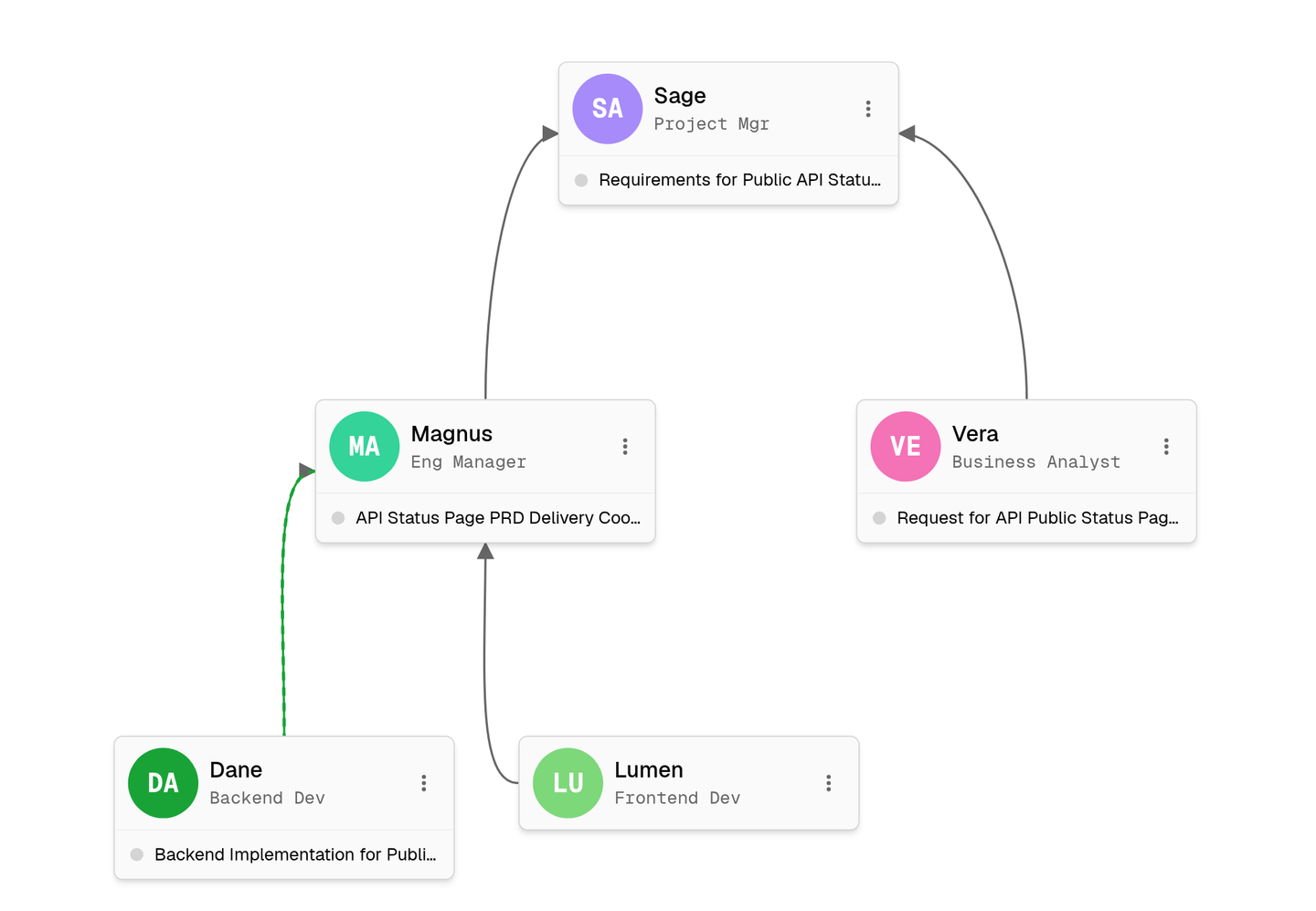
- layered. a project manager over an engineering manager over engineers, with an analyst and a reviewer on their own lines.
a connection that would make an agent its own ancestor is rejected, so the chart stays a tree no matter how you rearrange it. hierarchies can nest deeply, up to 64 levels.
how work travels
an agent's reachable teammates are exactly its direct reports plus its own manager. nobody can reach sideways across the chart, and nothing routes through an agent that was not wired in.
- you give the top of the chart a request in plain language.
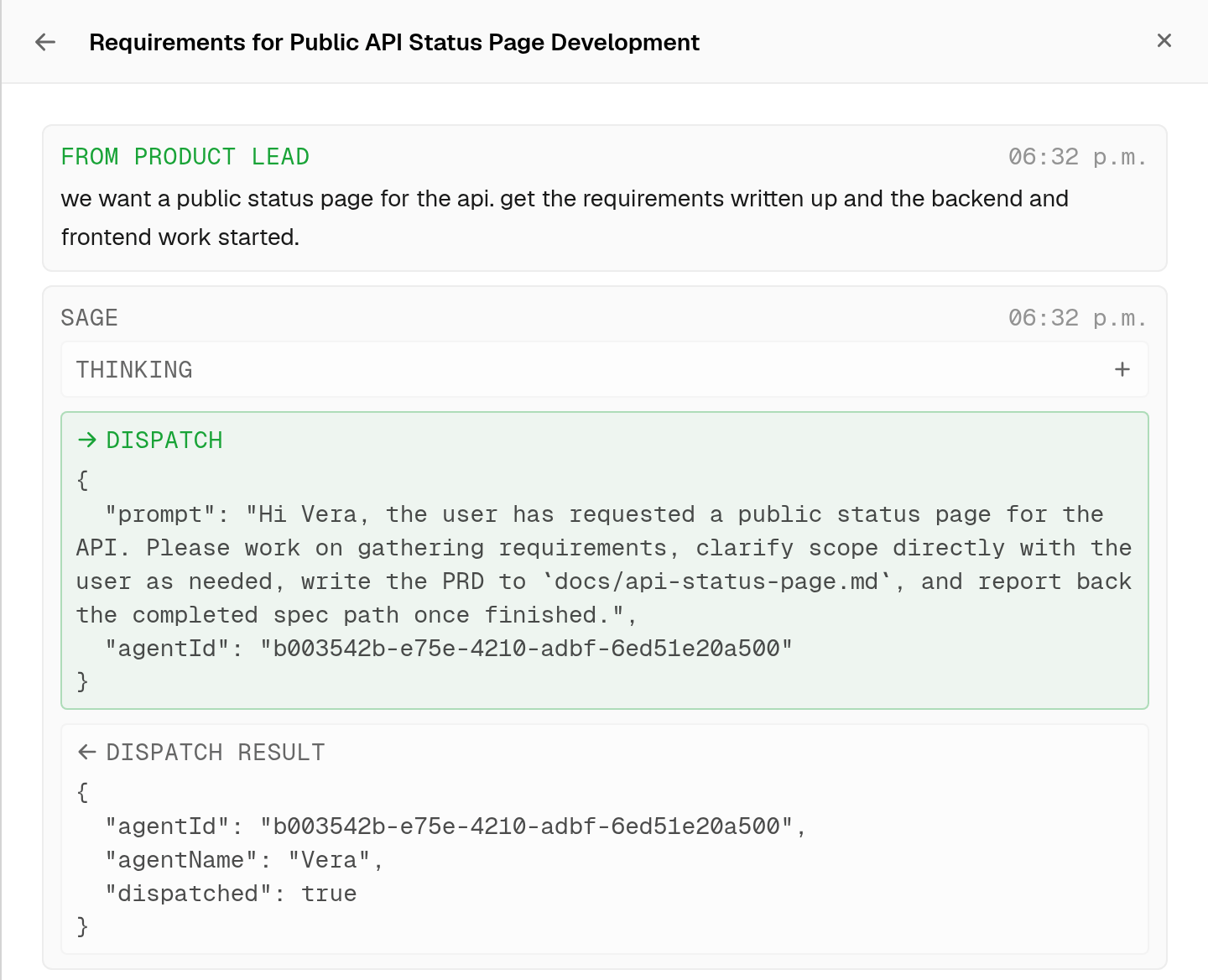
- that agent finds the right report by capability, looking teammates up by role or trait rather than by name, then hands the work over.
- the report does the work on the room's own server and replies up with a status line and the detail behind it.
- the manager reads the reply, decides the next step, and either hands on the next piece or reports up to you.
two caps keep the traffic sane: an agent may hand out at most 3 pieces of work in one turn, and a chain of hand-offs may run at most 10 deep. managers built for delivery also work strictly one report at a time, so two agents never edit the same checkout at once.
you watch it happen
the room canvas draws a line between every manager and report, and the line lights up while work is moving along it. an agent that is thinking, running a command, or waiting on you says so on its own card. when a hand-off goes to the wrong place, you can see which line it went down instead of reading logs afterwards.
roles come from the agent roster, the working state behind each hand-off lives in agent memory, and anything that touches your accounts still stops at the approval gate.
faq
do i have to write orchestration code?
no. you hire agents, give them a manager, and ask for what you want. delegation and hand-backs follow the lines you drew.
can an agent hand work to anyone in the room?
no. an agent reaches only its direct reports and its own manager. that is what makes the chart the routing table rather than a diagram.
what happens if a role is missing?
the manager degrades gracefully. it either does the work itself when that is reasonable or reports the gap upward, rather than stalling on a teammate you never hired.
can i restructure a running room?
yes. rewire at any time and the next hand-off follows the new lines. existing chats and memory are untouched.
does a flat room still work?
yes. with no lines drawn, every agent talks to you directly. the hierarchy earns its keep once you want one request to fan out into several people's work.
spin up your first room.
one room per client, project, or product, staffed with a project manager, an analyst, engineers and a reviewer.