start using PHP with your agents
sign up, open a room, and install PHP from its technologies tab.
php ai agent: agents that run your php code, not describe it
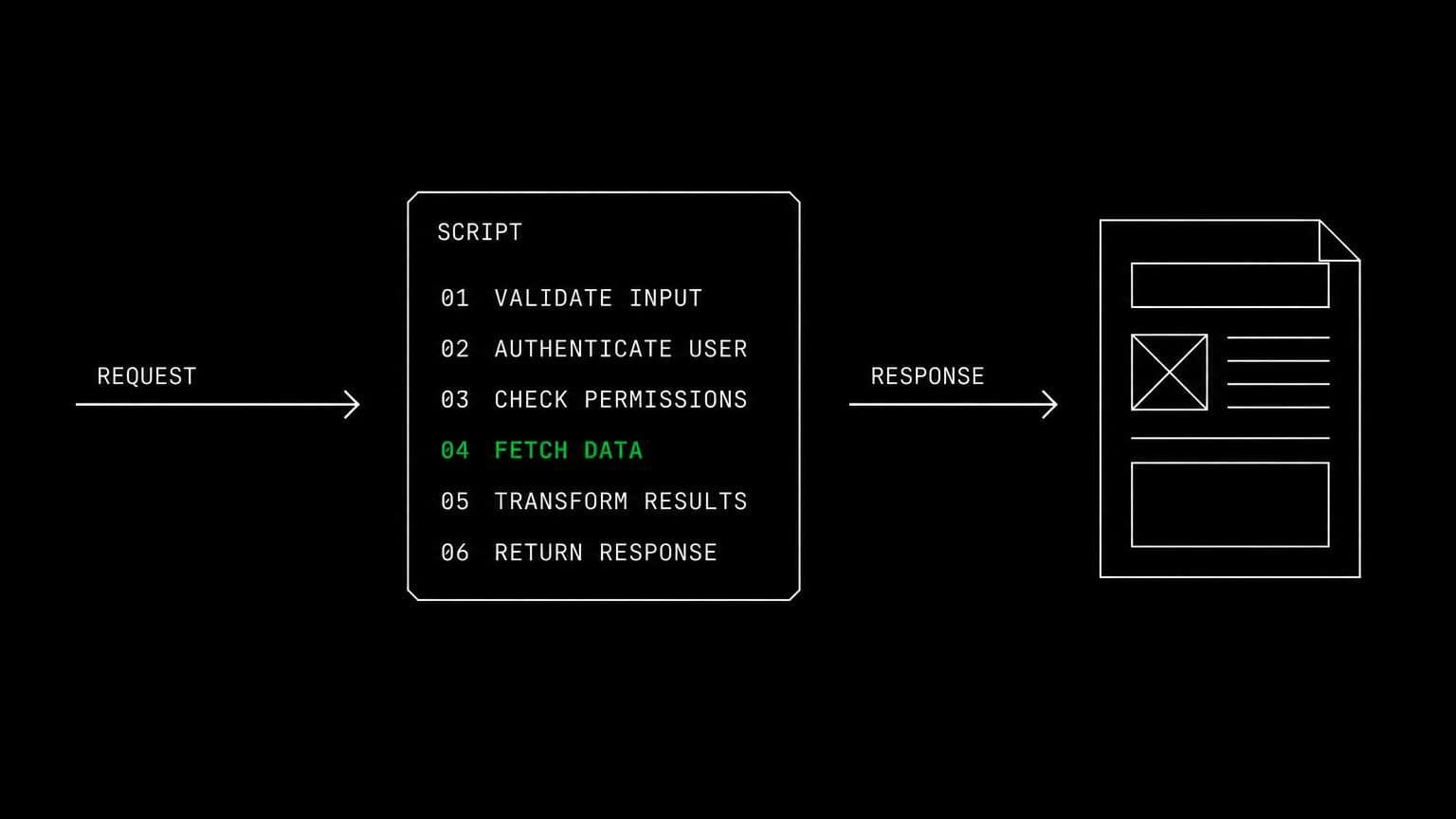
install php on a room's server and its agents run scripts, check loaded modules, start a dev server, and iterate on real output instead of guessing at the code.
- runs on
- room server
- installed
- per room
- category
- runtime
php on a room is a real runtime on a real machine. once it reports installed, php is on the room server's path and every agent in the room reaches it through the bash tool.
what agents do with it
the loop is run, read, edit, run. an agent executes a script with php script.php and reads the actual notice, warning, or fatal error with its file and line. php -m answers which extensions are loaded, which turns a vague failure into a specific missing module. php -S 127.0.0.1:8000 starts a development server on the room's machine so a route can be exercised rather than read.
the matching skill
php ships with a skill of the same name. it covers checking the version and the module list, running scripts, starting the built-in server, and the fact that composer is a separate install. skills load only for the agents you assign them to, so the engineer working the php service carries it and the rest of the room does not.
example tasks
- 01
this endpoint returns a 500. find the cause.
the agent starts the built-in server on the room machine, calls the route, reads the fatal error with its line number, and fixes the file it points at.
bashreadedit - 02
will this script run on our php version?
it checks the runtime version and the loaded modules on the room server, runs the script, and reports the specific syntax or extension that would fail.
bashgrep
what to know before installing
the room needs a paid server tier. the install pulls the latest php runtime and cli, and exits early if php is already present. composer, framework tooling, and any extension the project needs beyond the defaults are installed separately on the room's machine.
how to install PHP
PHP is installed per room from the technologies tab, not once per team and not on your laptop.
- give the room a server
technologies are installed on real hardware, so the room needs a 2 GB, 4 GB, or 8 GB tier. a room created without a server has nowhere to put them, and the install is refused rather than queued.
- open the technologies tab
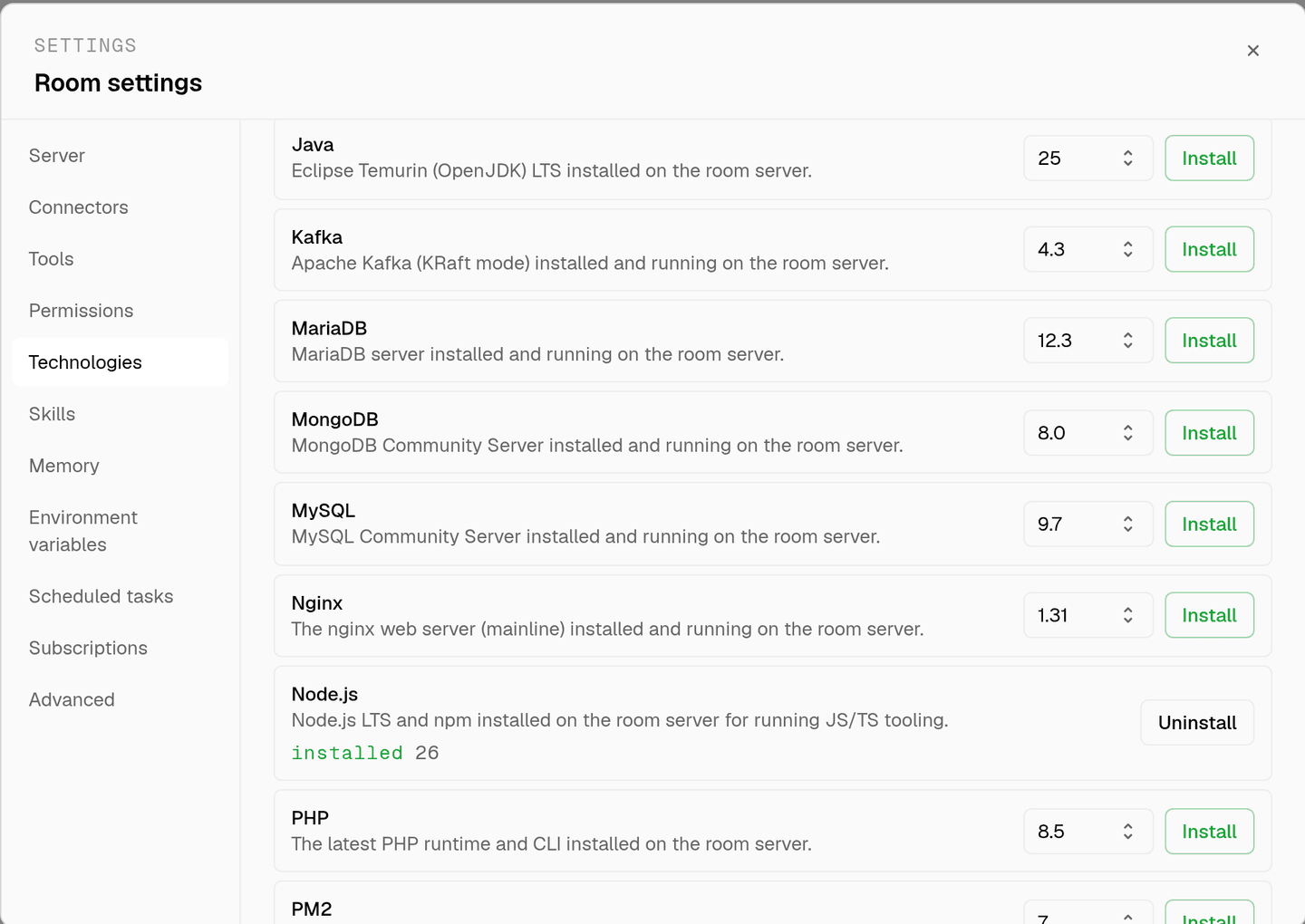
room settings lists every installable technology with its status. pick PHP and the install is queued for that room's server alone.
- watch the install run
the room streams the status through pending, installing, and installed, and a failed script surfaces its error instead of leaving the room in an unknown state.
- agents use it through bash
once it reports installed, every agent in the room reaches PHP with the bash tool, on the same filesystem as the checkout they are working in. uninstalling runs the teardown script and takes it away again.
where PHP actually lives
each room owns a server for its whole life, and the technologies tab is how you decide what is on it. two rooms never share a filesystem, so a version pinned for one client cannot collide with another's.
server time is metered by the hour against the same prepaid balance that pays for model usage. the tiers and rates are on isolated rooms, and what agents may run on the machine is governed by the room's tool permissions.
faq
what does installing php on a room give the agents?
the php runtime and cli on that room's server. agents run scripts with php script.php, list the loaded modules with php -m, and start a development server with php -S when they need to exercise a route rather than read it.
does the install include composer?
no. the technology installs the php runtime and cli. if a project uses composer, install it separately on the room server before running composer install. the shipped php skill says the same thing so agents do not assume it is there.
how does an agent know which extensions are available?
php -m lists the loaded modules on the room's machine, so an agent checks rather than assumes. a missing extension is then a specific thing to install rather than a mysterious failure halfway through a run.
can agents work on a legacy php codebase?
yes, and this is where a real runtime helps most. an agent can run the actual file, see the notice or the fatal error with its line number, and work from that instead of reasoning about behaviour spread across includes.
spin up your first room.
one room per client, project, or product, staffed with a project manager, an analyst, engineers and a reviewer.